Project at a Glance
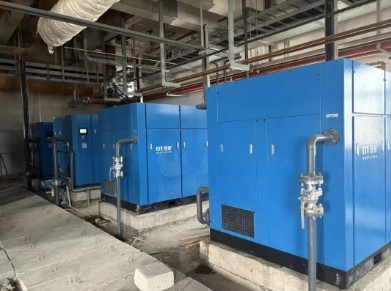
A molten-salt tower concentrated solar power (CSP) plant in a desert environment needed a compressed air supply that could run continuously, withstand dust and wide temperature swings, and serve two very different duties at once: high-volume instrument and process air, and medium-pressure air for purging and specialized valve actuation. Off-the-shelf compressor packages could not cover both ends of that load profile. The plant installed two oil-injected screw compressors in a split-pressure arrangement—a DH-185ZW fixed-speed two-stage unit and a DRV-185ZW medium-pressure unit—along with site-specific intake protection, cooling logic, and operator training.
Background
Molten-salt tower plants concentrate sunlight with a large heliostat field onto a central receiver, heating nitrate salt for thermal storage and dispatchable generation. That configuration depends on compressed air at several points. Instrument air drives control valves and drain valves on the salt side. Process air actuates those valves and also cools salt pump bearings. Heliostat tracking itself has long been demonstrated with pneumatic drive principles, where compressed-air pulses move the concentrator array. In practice, the air system is not a utility afterthought: a pressure dip on the instrument header can interrupt valve response, and contamination can wear precision trim in ways that are difficult to trace back to the air supply.-2-11
The site conditions raised the bar further. Ambient dust loads are high, day-night temperature differentials are large, and the plant runs year-round. The air demand also shifts between a continuous base load and periodic medium-pressure events for purging and actuator strokes.
The Problem with a Standard Package
A single compressor sized for the total connected load would run inefficiently at part load for much of the day. A single-pressure system would also force the entire plant to operate at the highest pressure required by the most demanding user—typically the wrong answer for energy consumption, because low-pressure users would be served at an unnecessarily high pressure. What the plant needed was a split system: one machine for base instrument and process air, and a second machine dedicated to the medium-pressure duty, each controlled so that the two do not fight each other on the same header.
The Installed Solution
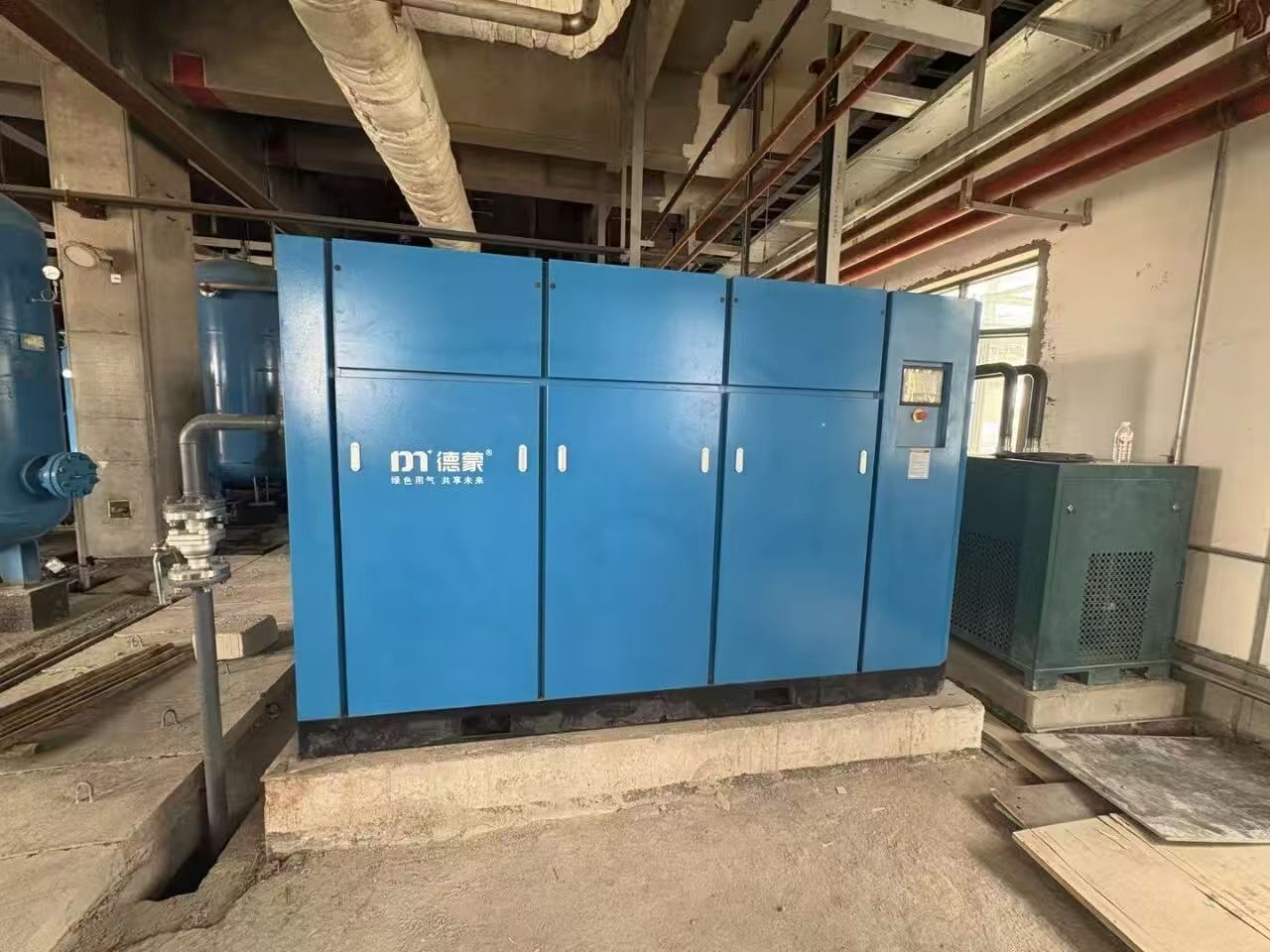
The DH-185ZW is a fixed-speed, two-stage oil-injected screw compressor. Two-stage compression splits the pressure ratio across two rotors, which reduces the work lost to interstage heat and improves specific power compared with a single-stage machine at the same discharge pressure. In this installation it carries the base load: heliostat field pneumatics, instrument air for control and drain valves, and general plant process air. Fixed-speed operation suits a load that is steady for long stretches, and the two-stage air end keeps the kWh per cubic meter low under continuous duty.
The DRV-185ZW serves the medium-pressure segment. Medium-pressure screw compressors typically cover the 20–40 bar range, a band that sits above ordinary plant air but below the very high pressures associated with specialized gas compression. At this plant it is assigned to molten-salt line purging and the special pneumatic actuators that need a firmer pressure floor than the base header can provide. The machine is set up to hold pressure within a narrow band, because the users downstream—precision valve trim and high-temperature piping—are sensitive to both pressure swings and particulate carryover.-24
The two compressors are sequenced so that the base machine handles the steady instrument/process load while the medium-pressure machine cuts in for its dedicated users. This avoids the common failure mode in multi-compressor rooms where both machines run partially loaded and the header pressure still wanders. Splitting the system by pressure zone also means the base header does not have to be held at the medium-pressure setpoint, which trims energy use across the larger air volume.-70
Site-Specific Engineering
Desert dust is an air-end problem before it becomes a filter problem. The plant specified intake protection beyond the standard panel filter, with the aim of keeping the dust that does enter the machine fine enough and low enough in concentration to avoid accelerated rotor and bearing wear. The cooling and temperature-control logic was also adjusted for the site's temperature range, because a compressor that starts reliably at dawn and runs through a 30°C-plus afternoon swing needs control parameters that a temperate-climate package does not provide. Neither change is exotic, but both are the kind of detail that separates a compressor package that lasts from one that becomes a maintenance burden in year two.
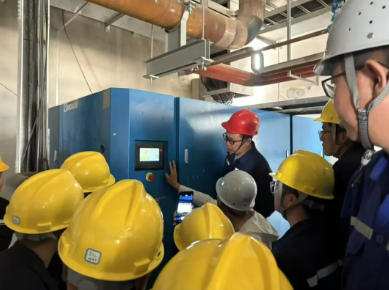
Operator Training
The plant ran a hands-on training program for the operations team covering both machines. Content included start-up and shutdown sequences, daily inspection points, filter and lubricant change intervals, recognition of abnormal running conditions, emergency response, and energy-conscious operating practices. The emphasis was on the differences between the two units—the two-stage base machine and the medium-pressure machine do not share the same operating envelope or the same maintenance triggers. Standardizing those routines reduces the chance that a medium-pressure event gets handled with base-load assumptions, which is where most avoidable trips originate.
Outcome
The split-pressure arrangement gives the plant a base air supply and a medium-pressure supply that can be controlled independently, rather than a single oversized system running at the highest pressure on the site. The two-stage base machine carries the continuous instrument and process load at a lower specific power than a single-stage unit would; the medium-pressure machine covers the intermittent high-pressure duty without forcing the whole plant onto that pressure level. Intake and cooling modifications address the two site conditions—dust and temperature swing—most likely to shorten air-end life. Training ties the equipment to the people who run it, so the control philosophy survives shift changes.
For a CSP plant, compressed air is a small fraction of capital cost but a disproportionate share of nuisance trips if it is underspecified. This installation treats the air system as two coordinated supplies rather than one compromise, and matches the equipment and the operating routines to the site rather than to a catalog sheet.