Cement manufacturing is one of the most energy-intensive industries in the world. Within a cement plant, compressed air is not a luxury—it is a critical utility that powers pneumatic conveying, material handling, process control, instrumentation, and system cleaning.
In fact, approximately 70% of the installed power for compressed air in a cement plant goes to low-pressure equipment (below 4 bar) for pneumatic conveying, fluidization, and combustion air. This makes air compressor efficiency a direct driver of production costs.
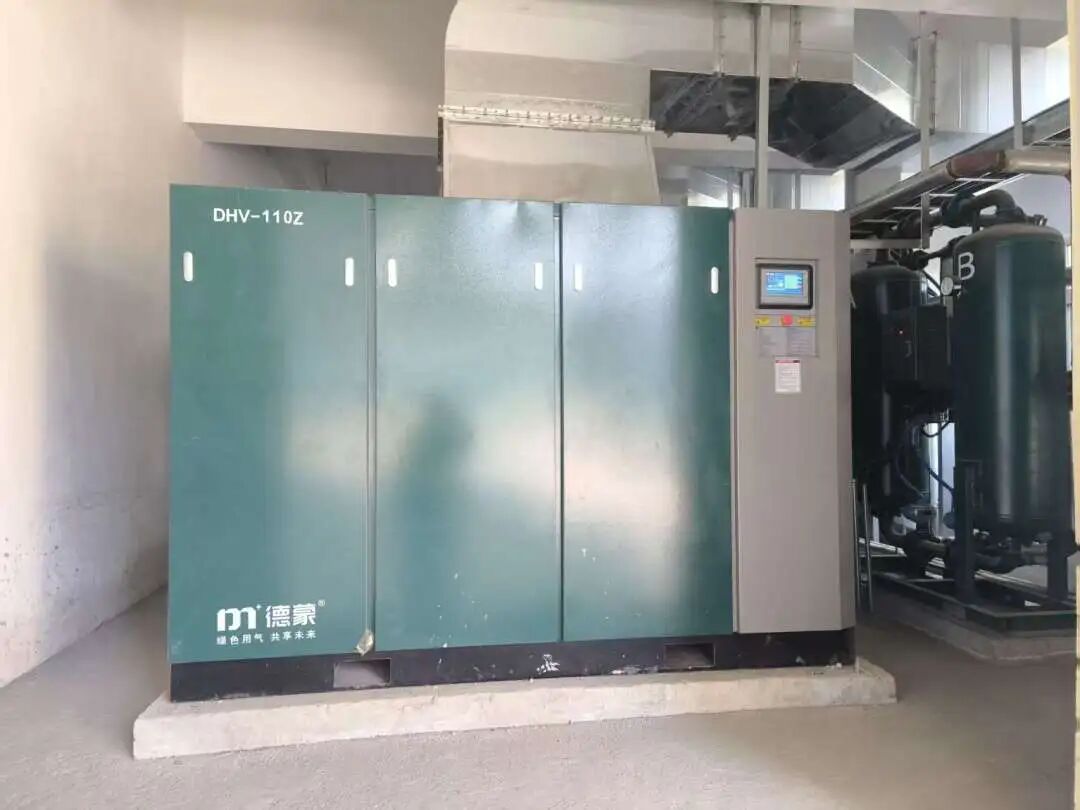
A cement plant in China recently made a decisive move to optimize its compressed air system. The plant operates two 4,000-ton-per-day new dry-process rotary kiln production lines and has long been committed to energy-saving upgrades. After a thorough evaluation of efficiency, reliability, and overall performance, the plant placed a bulk order for 6 DREAM DHV-110Z two-stage permanent magnet VSD screw air compressors.
Here is why they chose the DHV-110Z—and why it matters for cement plants worldwide.
Cement production places unique demands on compressed air systems:
24/7 Continuous Operation – Cement kilns run around the clock. Any unplanned compressor downtime can halt production, leading to significant revenue loss. Compressors must operate reliably in high-temperature, high-dust environments.
Energy Efficiency – Compressed air systems are a major energy consumer in cement plants. Poorly designed or maintained systems can waste substantial energy. Every percentage point of efficiency improvement directly reduces the cost per ton of cement.
Low Maintenance in Harsh Conditions – Dust, heat, and continuous operation take a toll on equipment. Compressors must be robust and require minimal intervention.
The DREAM DHV-110Z belongs to the DHV-Z series of two-stage, direct-drive, permanent magnet VSD screw air compressors. Here is how it addresses the specific needs of cement plants.
Proven Design – The DHV-110Z is built on a mature, market-validated technology platform. Each unit undergoes strict quality control to ensure consistent reliability for 24/7 cement production.
Two-Stage Compression Reduces Bearing Load – By splitting compression across two stages, each stage operates at a lower compression ratio. This significantly reduces the load on main bearings, resulting in smoother operation and extended equipment life.
Comprehensive Safety Protection – The unit integrates multiple safety mechanisms, including overpressure protection and overheat protection. The system automatically detects abnormal conditions and responds promptly, preventing minor issues from escalating into major failures.
Low-Noise Operation – Dual variable-speed drives on the main motor and cooling fan, combined with sound-dampening materials, reduce overall noise levels. This improves the working environment and contributes to better heat dissipation and long-term stability.
Two-Stage Compression Technology – Air is compressed in the first stage, cooled through an intercooler, and then compressed in the second stage. This staged approach reduces the compression ratio per stage and minimizes energy loss. Compared to conventional single-stage compressors, the DHV-110Z delivers 25–35% energy savings.
IE5 Permanent Magnet Synchronous Motor (IP54) – Manufactured with rare-earth permanent magnets, the motor offers high starting torque, low starting current, and maintains peak efficiency across a wide operating range.
VSD Delivers Air on Demand – The variable speed drive automatically adjusts motor speed and power output based on real-time air demand. Unlike fixed-speed compressors that run constantly and unload wastefully, the DHV-110Z matches air supply to actual consumption—eliminating unnecessary energy waste.
For a cement plant running multiple compressors around the clock, these efficiency gains translate directly into lower electricity bills and reduced cost per ton of cement.
The decision to purchase 6 identical DHV-110Z units was not made lightly. It followed a thorough evaluation of energy efficiency and operational stability.
Since commissioning, the units have been supplying compressed air to both clinker production lines and the grinding system. Their performance—stable output and low energy consumption—has validated the scalability of DREAM's two-stage permanent magnet VSD technology in the cement industry.
This bulk order is more than a single transaction. It represents a replicable model for cement plants seeking to reduce energy costs through compressed air system optimization. It also demonstrates DREAM's capability to deliver large-scale, high-performance solutions for the building materials sector.
As the cement industry faces increasing pressure to reduce carbon emissions and operating costs, technologies like two-stage compression and permanent magnet motors will become standard—not optional.
DREAM is committed to helping cement producers get more value from every kilowatt-hour of electricity.
A: Two-stage compressors reduce the compression ratio per stage, lowering energy loss and heat generation. For cement plants running compressors 24/7, this translates to 25–35% energy savings compared to single-stage units.
A: Compressed air is used for pneumatic conveying of raw materials, fluidization, combustion air, instrumentation, process control, and cleaning. Approximately 70% of compressed air power in cement plants goes to low-pressure applications below 4 bar.
A: Variable speed drive adjusts motor speed to match real-time air demand. Unlike fixed-speed compressors that run at full speed and unload excess air, VSD compressors only produce what is needed—eliminating wasteful unloading cycles.
A: The DHV-110Z is equipped with an IE5 permanent magnet synchronous motor, the highest efficiency class available, with IP54 protection for dust resistance.
A: Yes. The DHV-110Z is built with robust enclosures and cooling systems designed to operate reliably in high-dust, high-temperature industrial environments.
Contact DREAM for Cement Industry Solutions
DREAM Compressor specializes in high-efficiency compressed air solutions for heavy industries, including cement, mining, and building materials.
WhatsApp: +86 136 7155 1445
Email: [email protected]