Compressed air is widely used in manufacturing industries such as textiles, electronics, food processing, automotive production, and construction. Because compressed air systems operate continuously in many factories, they are often one of the largest sources of electricity consumption in industrial facilities.
In fact, energy consumption can account for up to 70–80% of the total lifecycle cost of an air compressor. For this reason, selecting an energy-saving air compressor is essential for companies seeking to reduce operational costs and improve production efficiency.
This guide explains how to choose an energy-efficient air compressor, understand efficiency standards, and identify technologies that help reduce energy consumption.
When purchasing an air compressor, many companies focus mainly on the equipment price. However, the purchase price represents only a small portion of the total cost.
Typical life cycle cost distribution of an air compressor:
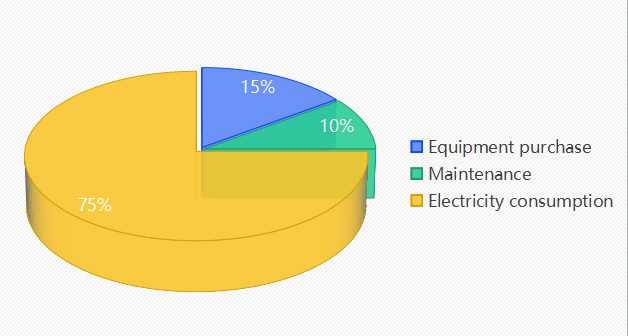
This means that energy efficiency has the greatest impact on long-term operating costs.
A high-efficiency compressor can reduce electricity consumption by 20% to 35%, resulting in significant savings for industrial facilities.
Many countries and regions have introduced standards to evaluate compressor efficiency. In China, one of the most widely used standards is GB19153 – Minimum Allowable Values of Energy Efficiency and Energy Efficiency Grades for Positive Displacement Air Compressors.
The standard classifies compressors into three energy efficiency levels:
| Efficiency Grade | Description |
| Grade 1 | Highest efficiency |
| Grade 2 | Energy-saving level |
| Grade 3 | Minimum allowable efficiency |
Compressors that fail to meet Grade 3 cannot be sold in the market. For industrial buyers, selecting Grade 1 compressors usually ensures the best energy performance.
One of the most important indicators used to evaluate compressor efficiency is Specific Power.
Specific Power measures the amount of electricity required to produce compressed air.
Specific\ Power = \frac{Power\ Input}{Air\ Flow\ Output}
The unit is typically expressed as kW per m³/min.
A lower specific power value means:
When comparing different compressors, buyers should always check the specific power value provided in technical data sheets.
Modern compressor manufacturers use several technologies to improve energy efficiency.
Two-stage screw compressors compress air in two separate stages, which reduces compression temperature and energy loss.
Compared with traditional single-stage compressors, two-stage compression can reduce energy consumption by 15–35%.
For many factories, this technology provides one of the most efficient solutions for long-term energy savings.
Variable speed compressors automatically adjust motor speed according to air demand.
Benefits include:
VSD technology is especially useful in factories where air demand fluctuates throughout the day.
The air end is the core component of a screw compressor. Modern designs improve efficiency by:
These improvements significantly enhance overall compressor performance.
When selecting an air compressor for industrial applications, buyers should consider the following factors.
Air flow, usually measured in m³/min or CFM, determines the size of the compressor needed for the application.
Undersized compressors will run continuously at full load, increasing energy consumption.
Excessively high pressure levels waste energy.
As a rule of thumb:
Increasing pressure by 1 bar can increase energy consumption by approximately 7%.
Selecting the correct pressure level can significantly improve system efficiency.
A compressor is only one part of the system. A complete compressed air system includes:
• Air receivers
• Air dryers
• Air filters
• Distribution pipelines
• Control systems
Optimizing the entire system can improve efficiency and reduce energy waste.
Many industrial plants are upgrading to two-stage screw compressors because they provide higher efficiency and improved reliability.
Key advantages include:
These compressors are widely used in industries such as textiles, manufacturing, mining, and food processing.
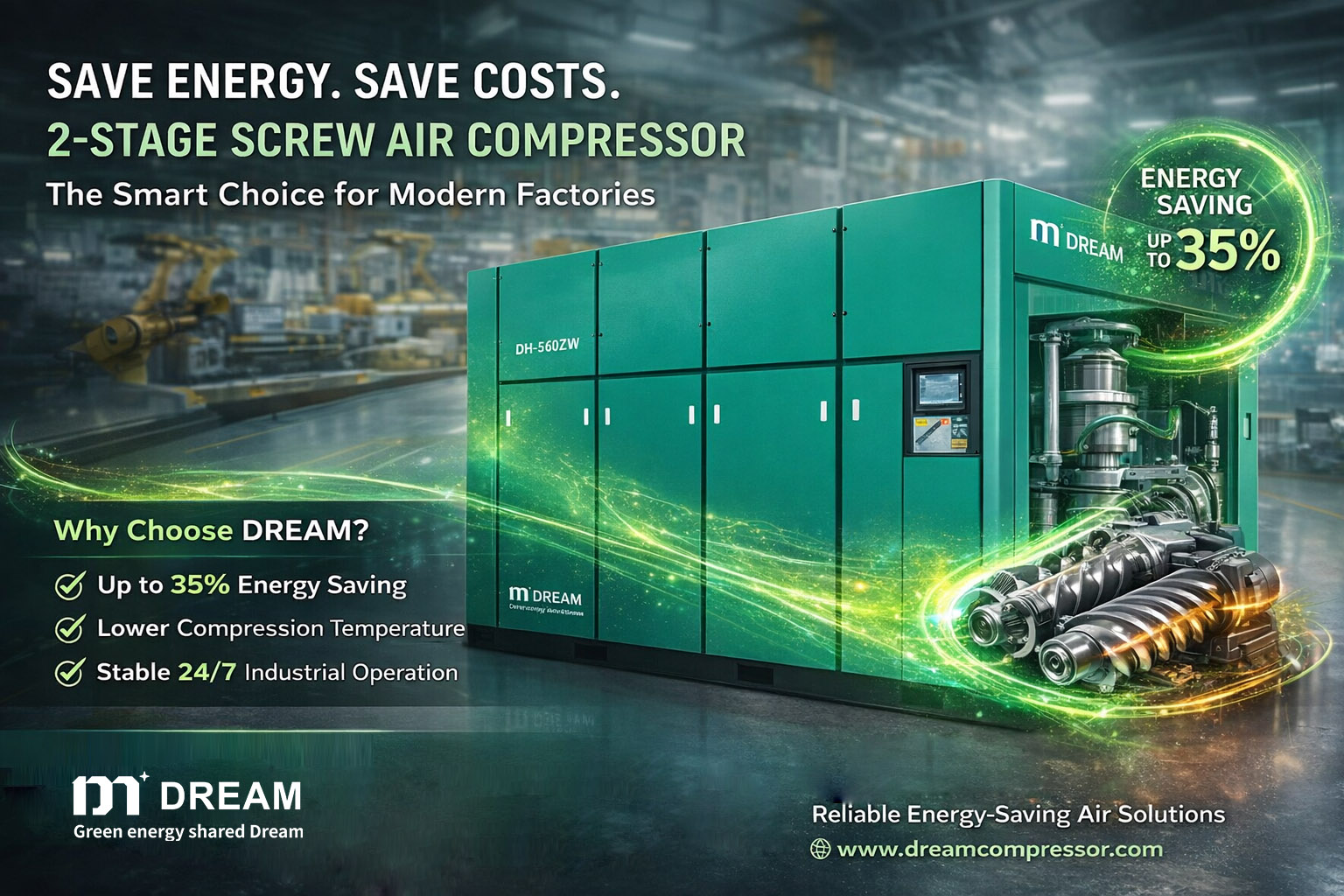
Two-stage rotary screw compressors are generally considered among the most energy-efficient compressors for industrial applications. Their multi-stage compression process reduces energy loss and improves overall efficiency.
High-efficiency compressors can reduce energy consumption by 15–35%, depending on system design, operating conditions, and air demand.
Specific power measures how much electricity is required to produce compressed air. Lower specific power indicates higher efficiency and lower operating cost.
Industrial air compressors usually have a service life of 10 to 15 years, depending on operating conditions, maintenance, and equipment quality.
Companies can reduce energy consumption by:
•Choosing high-efficiency compressors
•Reducing air leaks in pipelines
•Lowering unnecessary pressure levels
•Installing variable speed compressors
•Maintaining dryers and filters regularly
Selecting an energy-saving air compressor is one of the most effective ways for factories to reduce operational costs and improve production efficiency.
By understanding compressor efficiency indicators, following international standards, and adopting advanced technologies such as two-stage compression and variable speed drives, companies can significantly reduce electricity consumption and improve system reliability.
For modern industrial applications, investing in high-efficiency compressors is not only an environmental choice but also a smart long-term business decision.
Contact DREAM for Professional Air Compressor Solutions
Our experts are ready to help you choose the right air compressor system for your application. Get professional advice, technical support, and a fast quotation today.
WhatsApp: +86-13671551445
Email: [email protected]