Compressed air is often called the “fourth utility” in manufacturing, yet it is typically the least energy-efficient. In many factories, compressed air systems account for 10–30% of total electricity consumption, with energy losses often exceeding 30%. For industrial buyers and plant engineers, designing an energy-saving air compressor station is not simply about selecting a high-efficiency compressor—it requires a holistic, system-level approach.
Dream compressors, a Chinese industrial screw air compressor manufacturer, has helped hundreds of factories worldwide optimize their compressed air systems. Based on real-world experience, this guide provides a structured methodology to ensure your new station delivers maximum efficiency from day one.
Before selecting any equipment, a systematic compressed air audit is essential. Most factories overestimate their demand by 20–30%, leading to oversized compressors that operate inefficiently at partial load.
What to measure:
Flow rate: Install data loggers on the main header to record actual air consumption over a full production cycle (including shifts and weekends).
Pressure: Identify pressure fluctuations and the highest pressure requirement among all equipment.
Power: If existing compressors are in use, record their electrical consumption to establish a baseline.
Key output of the audit:
Peak demand value and duration
Average base load
Baseline leakage (often 20–40% of total flow in unmanaged systems)
Pro Tip from Dream compressors: Over 60% of factories we audit discover they can reduce their installed compressor capacity by 20% or more simply by fixing leaks and optimizing pressure settings.
Every 0.1 MPa (1 bar) reduction in system pressure reduces energy consumption by approximately 7–8%. This is one of the most cost-effective efficiency measures available.
Best practices for pressure setting:
Set the system pressure based on the highest required device, but consider local boosters for a small number of high-pressure points rather than elevating the entire system.
Avoid setting pressure higher than necessary “just to be safe.”
Use pressure regulators at point-of-use to step down pressure for lower-demand applications.
Calculating the required compressor capacity involves several factors:
Formula:
Required Capacity = (Peak Demand – Leakage) × Safety Factor + Planned Expansion
Safety factor guidelines:
Well-documented systems: 10–15%
Systems with limited data: 20–25%
Common mistake to avoid: Avoid the “one-size-fits-all” approach. A single large compressor may be less efficient than a combination of smaller units that can be staged to match load variations.
Adding capacity “just in case” leads to chronic inefficiency. Instead:
Design piping and electrical infrastructure to accommodate future expansion.
Select a compressor configuration that allows adding capacity in stages (e.g., one large base-load unit plus one VSD trim unit, with space for a third).
Consider modular compressor systems that allow capacity to be added without replacing existing units.
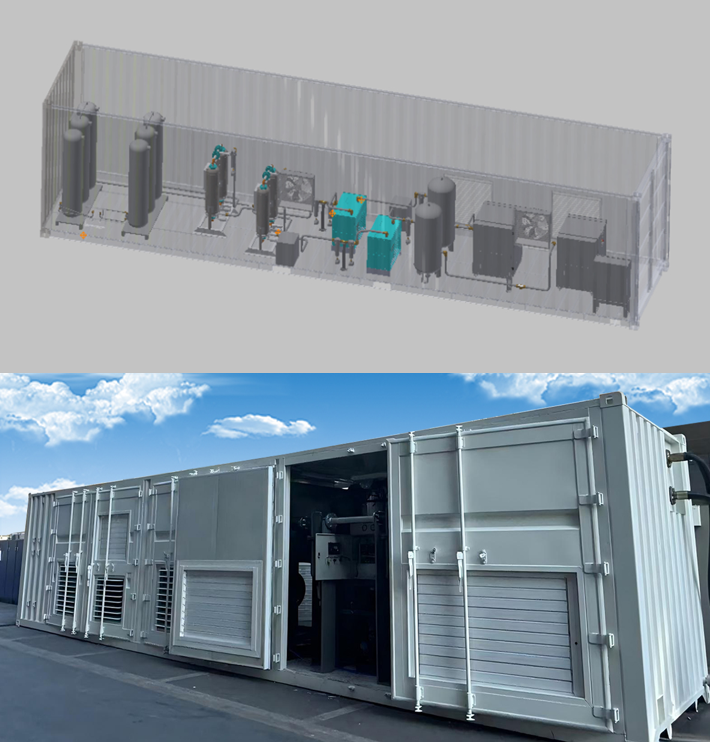
Proper station layout affects both efficiency and maintenance accessibility.
Key considerations:
Ventilation: Compressors generate significant heat. Ensure adequate fresh air intake and hot air exhaust to prevent overheating, which reduces efficiency.
Accessibility: Leave sufficient space around each unit for maintenance and part replacement.
Location: Place the compressor station as close as possible to the main consumption points to minimize long piping runs and associated pressure drop.
FAQ
Q: How often should I conduct a compressed air audit?
A: For new stations, conduct an audit during the design phase and again 6 months after commissioning. For existing systems, a full audit every 2–3 years is recommended to capture process changes and leakage creep.
Q: What is the most common mistake in designing an air compressor station?
A: Oversizing. Many engineers add a large safety margin “to be safe,” resulting in compressors that run at partial load for most of their life, which is significantly less efficient.
Q: Can Dream compressors help with system design and audit?
A: Yes. As a Chinese industrial screw air compressor manufacturer, Dream compressors provides pre-sales consultation, demand assessment support, and customized system design for clients worldwide.
Need expert guidance on designing your energy-saving compressor station?
Contact our engineering team today:
WhatsApp: +86 136-7155-1445
Email: [email protected]
Let Dream compressors help you build a system that saves energy from day one.