Compressed air plays a far more critical role in food and beverage production than most people realize. It is used for blowing, mixing, packaging, sorting, conveying, drying, filling, and even cleaning the production line. Whenever compressed air directly or indirectly touches food, packaging, or the clean environment, its quality becomes a food safety issue—not just an engineering one.
That is why the international food industry relies heavily on ISO 8573-1, the world’s most recognized air quality standard. More and more food processors now specify that their compressed air system must comply with ISO 8573-1 Class 0 or Class 1 oil-free standards.
In this article, you will learn:
ISO 8573-1:2010 is the most important global standard for compressed air quality.
It defines the purity levels for three major contaminants:
Each contaminant has several “Classes,” from Class 0 (highest purity) to Class 9 (lowest).
For food-grade applications, the required level is usually:
This ensures food manufacturers get clean, dry, and oil-free compressed air at all times.
Food and beverage production involves strict hygiene standards. Contaminated air can directly cause:
To avoid these risks, food safety systems such as:
all clearly state:
Compressed air that contacts food or food-packaging must be clean, dry, and oil-free.
ISO 8573-1 is therefore used as the verification standard to prove compliance.
Below is a clear summary of what food processors must control.
| Parameter | Food-Grade Requirement | Why It Matters |
|---|---|---|
| Solid particles | ≤0.1 μm (ISO 1) | Prevents contamination, dust, or foreign debris |
| Moisture (Water) | Pressure dew point ≤ –40°C | Avoids bacteria growth and corrosion |
| Oil content | ≤0.01 mg/m³ (ISO 1 / Class 0) | Prevents taste, odor, chemical contamination |
| Hydrocarbon content | ≤0.1 mg/m³ | Ensures air is fully oil-free and safe |
Food factories must also control:
Common requirement:
Food plants must avoid:
These can migrate into food or packaging, affecting taste and safety.
Many food processors previously used oil-injected screw compressors, believing filters would protect the air. But modern food safety laws clearly warn against this.
Even with many filters:
Any oil that enters the production line becomes a legal and safety issue.
Oil-free screw air compressors (dry type or water-lubricated):
That is why food auditors, especially under BRC, IFS, and ISO 22000, strongly recommend or require oil-free technology in direct food contact applications.
DREAM provides two full oil-free series:
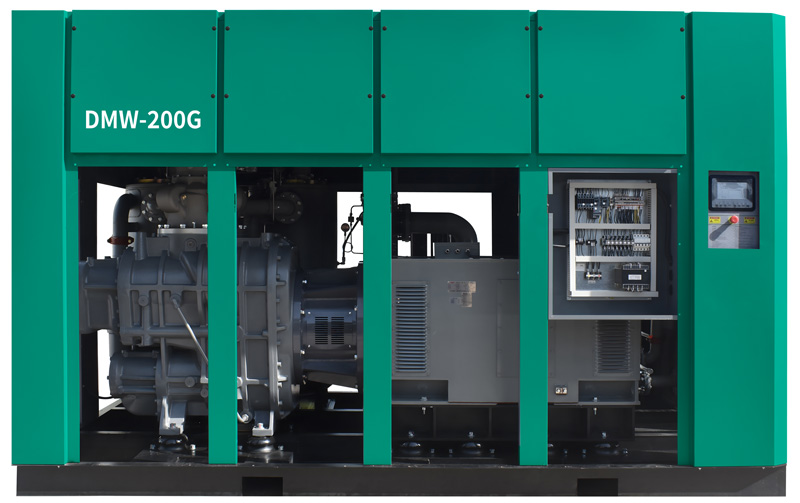
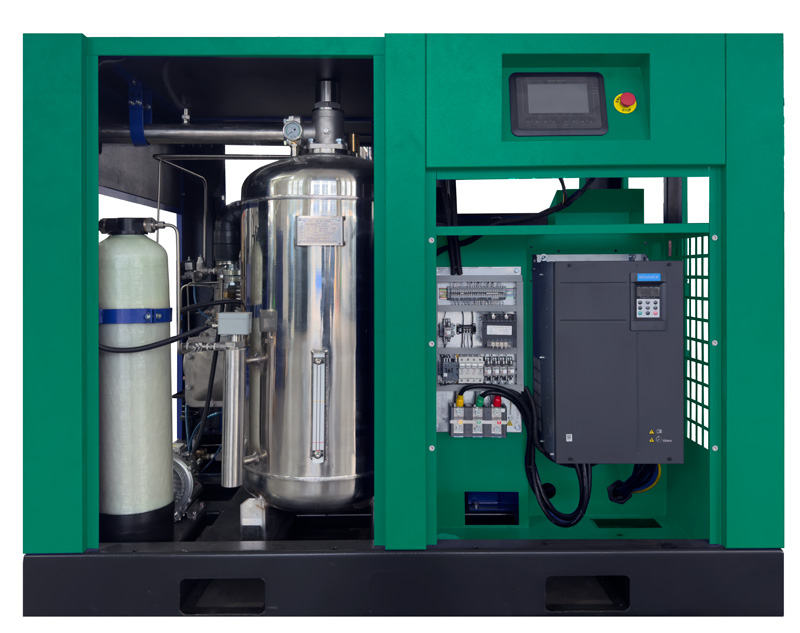
Absolute protection against oil contamination.
Ensures air meets Class 0 / Class 1 quality.
Compatible with HACCP, BRC, IFS, ISO 22000 requirements.
Protects product quality and extends shelf life.
Imported or domestic airends available to suit different budgets.
Including:
To fully meet food-grade air requirements, DREAM recommends:
This provides full traceability and ensures consistent air quality.
ISO 8573-1 is much more than a technical standard.
It is a food safety guarantee.
Using an oil-free air compressor ensures:
DREAM Oil-Free Screw Air Compressors (dry type + water-lubricated series) provide the clean, safe, and reliable air your food plant needs to pass audits and protect your brand.