Evaluating screw air compressor performance involves more than checking nameplate ratings. In real industrial environments, engineers rely on measurable performance metrics such as specific power, CFM vs kW, pressure stability, and actual energy consumption under load.
Understanding these factors helps buyers compare rotary screw air compressors more accurately and select systems that deliver consistent compressed air output with better long-term efficiency.
This guide explains how performance is measured, what affects efficiency, and how to interpret key metrics when choosing or optimizing a compressor.
Brief explanation of:
This continuous compression process directly influences performance metrics such as specific power, CFM vs kW ratio, and overall energy consumption.
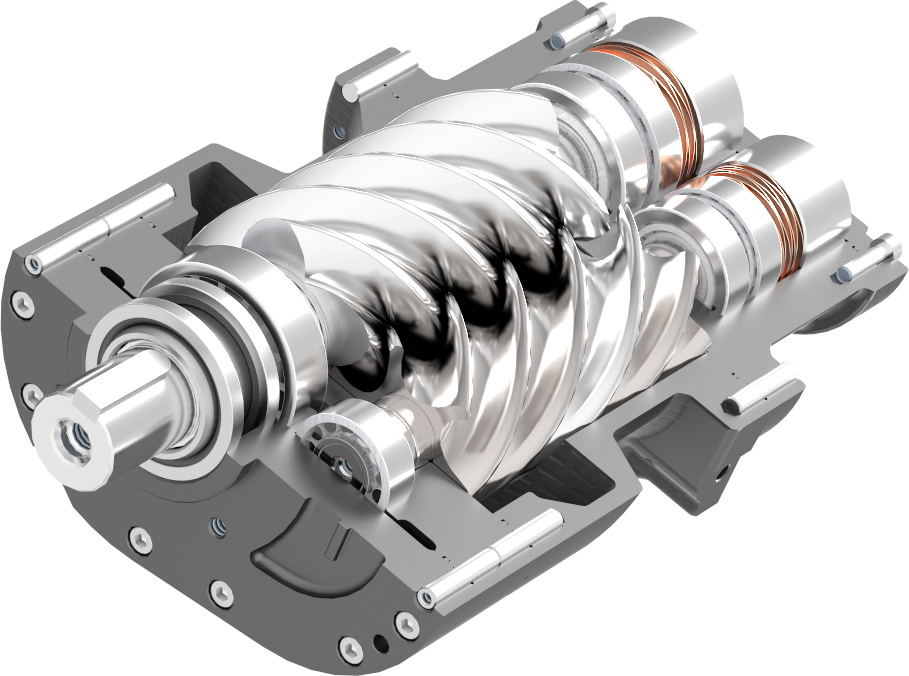
Screw air compressor performance refers to how efficiently electrical energy is converted into usable compressed air. The most common evaluation criteria include:
Compared with intermittent compression technologies, rotary screw air compressors are designed for continuous airflow and stable pressure delivery, making them widely used in manufacturing and process industries.
Performance comparisons should be based on measurable data rather than nominal horsepower alone. The following metrics provide a more accurate view of real efficiency.
Specific power measures how much energy is required to generate a unit of compressed air.
Formula:
Specific Power = kW ÷ CFM
Lower values indicate higher efficiency.
Example:
Even small differences in specific power can significantly impact lifecycle energy consumption, especially in 24/7 operations.
When evaluating compressors, request specific power data at both full load and partial load conditions.
The relationship between CFM vs kW helps determine how effectively a compressor converts electricity into airflow.
General interpretation:
However, comparisons must be made at identical pressure ratings. Air output decreases as discharge pressure rises, which can distort comparisons if pressure conditions differ.
Performance curves provide a clearer picture than single-point ratings.
Pressure stability affects the entire compressed air network. Fluctuations can lead to:
Rotary screw air compressors maintain steady pressure due to continuous compression cycles rather than start-stop operation.
For automated production lines and precision manufacturing, stable pressure directly supports process consistency.
Energy consumption represents the largest share of compressor ownership cost. Even modest efficiency improvements can generate measurable savings over time.
Factors that influence energy consumption include:
In many facilities, compressors operate at partial load for extended periods, making control strategy a major determinant of overall efficiency.
Variable speed (VSD) rotary screw air compressors adjust motor speed according to real-time air demand. Instead of switching between load and unload cycles, they continuously modulate output.
Performance advantages include:
Variable speed compressors are particularly effective in systems with wide ranging air demand, such as facilities with multiple shifts or fluctuating production schedules.
Beyond core metrics, several design and operational factors affect performance.
Rotor profile precision determines internal leakage levels and compression efficiency. Advanced rotor geometries typically deliver better specific power performance.
Higher discharge pressure increases energy consumption. As a rule of thumb, each 1 bar increase can raise energy use by 6–8%.
Avoid setting system pressure higher than necessary.
Efficient cooling maintains optimal air end temperature and preserves compression efficiency. Poor ventilation or clogged coolers can reduce output and accelerate wear.
Restricted intake filters increase pressure drop and reduce airflow. Clean intake air supports stable compressor output.
Leaks force compressors to run longer without increasing usable compressed air delivery. Addressing leakage often yields immediate efficiency gains.
Industrial compressed air demand rarely remains constant. Output requirements may change due to:
Compressors that maintain stable efficiency under wide ranging operating conditions are better suited for modern manufacturing environments.
Advanced control systems and proper system sizing help maintain consistent performance across variable demand profiles.
In applications with dynamic demand patterns, the performance difference becomes more evident over time.
When comparing rotary screw air compressors, request data beyond basic ratings:
Evaluating these performance metrics helps ensure accurate comparisons between models.
Existing systems can often be optimized without full replacement. Consider the following actions:
These adjustments can reduce energy consumption while improving overall compressed air stability.
Screw air compressor performance is typically evaluated using specific power (kW/CFM), airflow output, pressure stability, and real-world energy consumption. These metrics provide a more accurate picture of efficiency than horsepower alone.
Specific power measures how efficiently a compressor converts electricity into compressed air. It is calculated by dividing kW by CFM. Lower values indicate higher efficiency.
Always compare airflow and power consumption at the same pressure level. A compressor producing more CFM at lower kW offers better efficiency and reduced operating cost.
Stable pressure ensures consistent compressed air delivery and reduces energy waste. Pressure fluctuations can affect downstream equipment performance and increase operating costs.
Yes. Variable speed compressors adjust output based on air demand, reducing energy consumption during partial load operation and improving overall system efficiency.
Operating pressure, system leaks, control strategy, and load profile have the largest impact on energy consumption. Maintenance condition also plays an important role.
Screw air compressor performance should be evaluated using real-world metrics rather than nominal ratings. Indicators such as specific power, CFM vs kW, pressure stability, and actual energy consumption provide a clearer understanding of efficiency.
By analyzing these performance metrics and considering whether variable speed technology fits the application, buyers can make more informed decisions. For facilities operating under wide ranging demand conditions, selecting the right rotary screw air compressor and optimizing system setup can deliver consistent compressed air output and measurable long-term efficiency gains.